Injury
01With us you stay one step ahead of injury! And if it does happen, we take care of the whole coordination – from arranging medical appointments and planning your therapy right through to your recovery.
Physio 1.0
Everything your body needs – from therapy to training
Our philosophy
Giving you the best possible care is our top priority.
Thanks to interdisciplinary cooperation between therapists, sports scientists, trainers and doctors, we can include a very wide range of treatment methods in our approach. Therapy tailored to your goals and complaints is essential for the best treatment results. In all of this, quality always comes first for us.
Using physiotherapy and occupational therapy techniques, we treat the effects of injuries, illnesses, developmental problems and functional disorders of the musculoskeletal system, as well as of the internal organs and the nervous system. Mobilising and stabilising exercises and techniques regulate muscle tone and support function and strengthening in cases of muscle weakness and imbalances.
Preventive therapy is an equally important part of our philosophy. It relieves pain, improves mobility and so restores your physical and mental well-being. That’s why, in numerous group courses, you can strengthen your body, train your back or really relax with yoga.
Can’t find what you’re looking for?
Give us a call – we’re happy to advise you on which service suits you.
+43 512 89 03 03Restoring, improving and maintaining mobility and function.
Learn more about PhysiotherapyMobilising physiotherapy and therapeutic exercise are umbrella terms for physiotherapy treatment concepts and techniques carried out as one-to-one treatment. They can be passive, assisted or active.
They include all physiotherapy measures used to restore, maintain or improve the function of the body. Physiotherapy techniques are used to treat the effects of injuries, illnesses, developmental problems and functional disorders of the musculoskeletal system, as well as of the internal organs and the nervous system.
Every treatment is based on a thorough medical history and examination of the problem and a physiotherapy assessment. A treatment plan is then developed and the therapy tailored to your individual situation.
What makes manual therapy special is that it combines an individual assessment tailored to you and the treatment with our clinical experience and the latest scientific findings. As the name suggests, our hands play a big part. Alongside passive joint mobilisation and manipulation of the arms, legs and spine, we use neurodynamic techniques, muscle stretches and individually adapted home programmes.
Good treatment starts with a thorough examination of the problem and the limitations it causes in everyday life. Only then do we examine your body for active and passive movement restrictions and other symptoms. This clinical diagnosis helps us find where the cause of your problem most likely lies. We then draw up a treatment plan that focuses on the most significant findings. Regular re-assessments show how well the therapy is working and, if needed, test how other parts of the body influence the problem.
Manual therapy is used in particular for:
Lymphatic drainage stimulates the flow of lymph and reduces congestion in the tissue using specific massage techniques. These are performed gently, mostly in circular or pumping movements.
This creates a stretching stimulus on the lymph vessels that helps transport the lymph fluid to the lymph nodes, where it is filtered before being returned to the bloodstream.
Manual lymphatic drainage was developed by Dr Emil Vodder and is used for primary lymphoedema – malformations of the lymphatic system – and secondary lymphoedema (swelling), for example after surgery.
It may only be carried out by professionals with additional training in manual lymphatic drainage from an accredited training institute.
Medical massage treats tension, pain and disorders of the musculoskeletal system. It acts on the skin, muscles, subcutaneous connective tissue and tendons. Different massage techniques are used to achieve specific effects on the body.
Sports massage is a special form of massage that helps prepare the body for upcoming physical exertion and improve or restore performance. It also supports recovery after exercise and loosens the muscles.
The aim of sports physiotherapy is to bring the resilience of all structures up to the level your sport demands. Both prevention and rehabilitation are important.
To prevent injuries and overuse, support during training and competition is crucial. This includes muscle and joint function testing, sports medicine performance testing, training management and relaxation and recovery measures.
In rehabilitation after injuries or periods of reduced performance, the focus is on therapy with sport-specific loads and forms of rehabilitation training.
The full name of this treatment method is “proprioceptive neuromuscular facilitation”, a holistic physiotherapy concept. It uses the body’s potential at the level of perception to improve the interaction between nerves and muscles. Facilitation means initiating and easing physiological movements.
In practice, a three-dimensional, physiological movement pattern is performed against an adapted resistance.
Rigid tape is used to stabilise and relieve injured or painful joints, for example after a torn ligament. Joints are also often taped as a precaution to prevent a possible injury.
Kinesio tape is an elastic cotton tape that, applied in a targeted way, stimulates and supports the body’s natural healing process. It improves the sense of movement, increases blood flow and lymph flow, changes the perception of pain and influences muscle tension.
Fascia is the body’s connective tissue network; as a web-like structure it gives the whole body its shape and elasticity. It surrounds our muscles and ligaments, tendons and bones, organs and blood vessels. It is everywhere in the body and acts as a sheath, partition and connection. Healthy fascia is firm and elastic at the same time – flexible and tear-resistant, allowing springy movements. This keeps the tissue resilient, protects against injuries and keeps us in shape.
Mobilising the fascia can improve the resilience and function of this structure or correct its position and alignment. This can be done with manual techniques or with appropriate fascia training using various tools (e.g. a foam roller).
Medical flossing can have a positive effect on pain and restricted movement. With this method, muscles or joints are wrapped locally with a stretchy latex band and then moved. The elastic compression of the flossing band and the shear forces created by the movement can quickly change and normalise tension in the tissue.
We offer most physiotherapy treatments as home visits too. Your doctor prescribes this additionally if there is a medical reason for it. We then come to your home at an agreed time. This means we can treat you even if limited mobility prevents you from coming to the practice.
That said, our treatment rooms are easy to reach – also with a wheelchair or pram – thanks to good public transport connections and a lift.
Training with reduced gravity speeds up the start of gait therapy and makes quick progress in therapy possible. With the anti-gravity treadmill, patients can walk or run pain-free immediately after surgery and injuries to the knee, ankle or hip.
Early mobilisation and maintaining a natural gait help restore function more quickly. The unique differential air pressure technology ensures safe, comfortable and precise training with targeted weight relief. The point from which running and walking are pain-free for you can be set exactly.
Whether amateur clubs or top athletes – we support sports clubs and individual athletes at training sessions and competitions with our holistic care: from first aid on site to a safe return to sport.
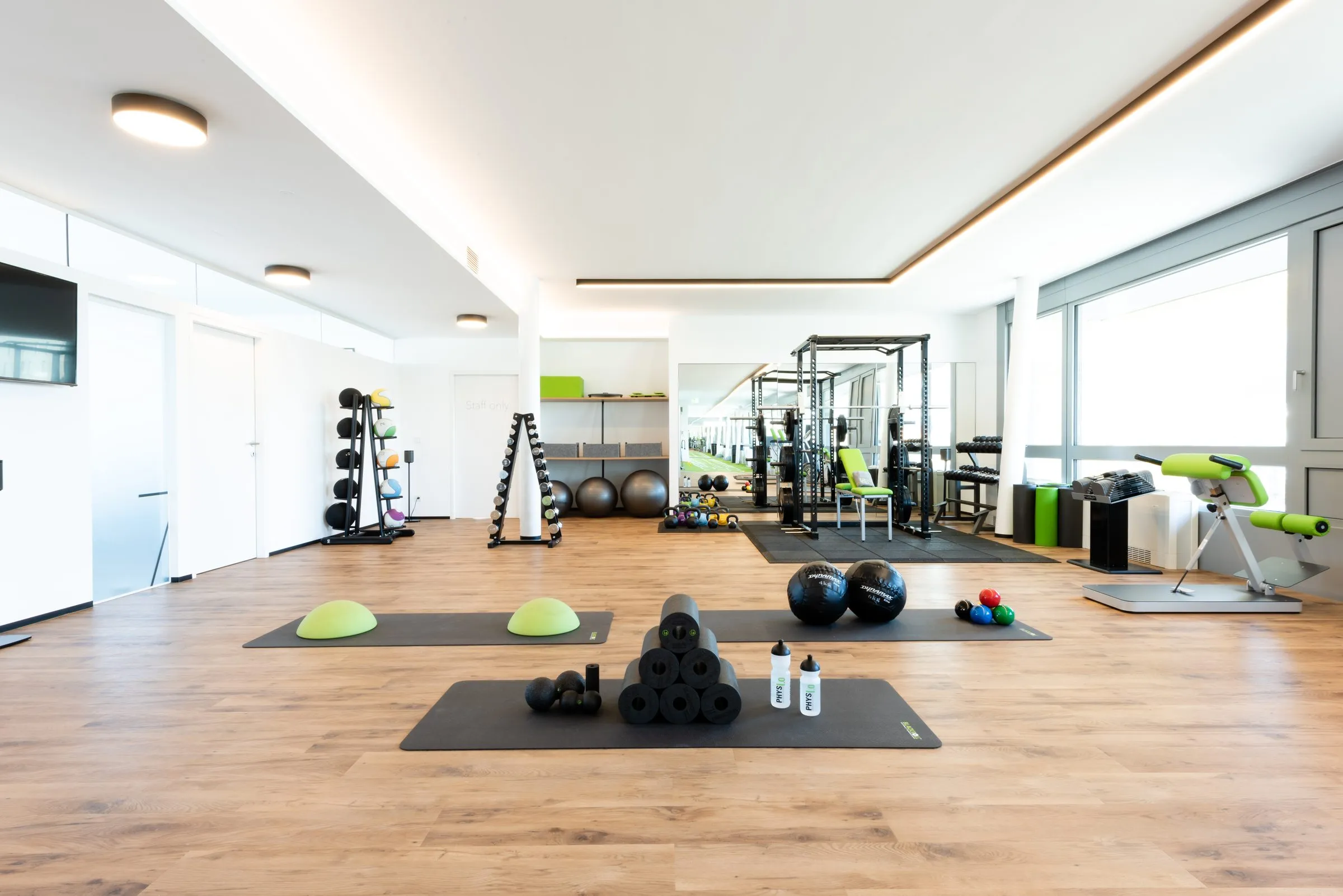
As a service for our active patients, we offer the option of training independently on our premises outside your therapy or training sessions.
This way you can do the exercises from your therapy or training on your own in an ideal environment, with all the equipment and materials you need.
That is exactly why we created the “Open Gym”: set times during which you can train independently with us, as long as you are an active patient or client of Physio 1.0.
HOW does it work?
You can book our “Open Gym” times via our customer portal, through our front office or through our therapists and trainers. Each training slot can be booked by a maximum of 6 people at the same time, so there is enough space and capacity for you.
Treating the body as an interconnected system and activating its self-healing powers.
Learn more about OsteopathyStress can have many dimensions and causes and can show up in various symptoms affecting body and mind.
Osteopaths are trained to address both the symptoms and the cause.
With long-lasting or unexplained pain, osteopathy can provide a new stimulus and calm the structures in the body that are under stress.
This clears the way to encourage a positive response throughout the body that dampens the pain stimulus.
After a recent sports injury, it makes sense to support the injured structure during its acute inflammatory phase.
Osteopathic techniques can help it heal as well as possible.
The osteopath can free the pathways of the incoming and outgoing vessels from narrowings to achieve the best possible healing.
In osteopathy, older scars and past traumas are also identified through a thorough medical history and included in the treatment. This can release long-standing dysfunctions in the body so that all tissue can move freely again.
Scars often play a key role in how the human body functions. If they are disturbed or have healed poorly, they can be a weak spot that other regions of the body then have to compensate for.
Prevention is one of the central pillars of osteopathy, so osteopathic treatment is worthwhile even before acute or chronic complaints arise.
The osteopath looks preventively for factors in the body that could lead to problems later on.
Gentle osteopathic techniques support women during pregnancy to ease side effects and are also used for newborns after birth.
The gut is not called the body’s second brain for nothing. Problems here can drain a great deal of energy and strength from the body and can make people ill in the long term.
There are manual treatment techniques as well as nutritional suggestions that help bring body and person back into balance.
In some cases it is worth combining training therapy with osteopathy. An osteopathic check can reveal functional blockages in the organ system or in joints and tissue that movement alone cannot resolve.
Once the osteopath has resolved them, this can also have a positive effect on your results in training therapy.
Strengthening your independence in self-care, work and leisure.
Learn more about Occupational therapyManual therapy techniques are used to achieve the best possible functional range of movement and so make everyday life as easy as possible. Joints and the surrounding structures are mobilised actively, with assistance or passively.
Techniques include joint mobilisation, fascial or muscular soft-tissue techniques and strengthening exercises.
Disturbed sensation in the hands can be very disruptive and make it much harder to grip and hold objects. A distinction is made between oversensitivity (hypersensitivity) and reduced sensitivity (hyposensitivity). With acquired nerve injuries, specially tailored therapy aims to normalise the disturbed nerve conduction. Finding the cause plays a very important role.
If, for example, your left arm has to be immobilised after an accident or surgery, your right arm has to do even more. This changes not only how you manage everyday life but also how signals are processed in the brain. Inactivity means the immobilised hand receives fewer sensorimotor impulses, while the other side is stimulated more. Muscles waste away during immobilisation, finger coordination and strength decrease and mobility increasingly declines.
Balance and coordination exercises, together with instruction in so-called mirror therapy, aim to transfer more impulses to the immobilised side in order to restore function as quickly as possible.
Scars can severely restrict mobility and cause pain.
Therapeutic techniques aim to release adhesions and hardening of the scar tissue so that the individual layers of tissue can glide properly again. The earlier mobilisation starts after the scar forms, the sooner the tissue can be freed.
Injuries cause swelling, which usually also restricts movement.
Decongestive techniques promote lymph drainage and circulation and lead to faster recovery. Local measures such as elevation, cooling, taping or compression bandages also help tissue fluid drain away more quickly.
Splints made of thermoplastic materials can stabilise, mobilise and stretch shortened structures such as hardened scars. Because the splint materials are fitted directly, pressure points can be avoided and the splint can easily be adjusted if needed.
Permanent movement restrictions are often compensated for by evasive movements of other joints, which in turn lead to non-physiological joint positions.
Suitable aids are used above all for permanent mobility restrictions to make it easier to manage everyday life independently. Joint protection measures aim to prevent wear and tear from one-sided strain by drawing attention to correctly aligned posture and strengthening weakened muscle groups.
Ergonomic advice mainly involves working out together with patients how their workplace can best be adapted to their working posture and movements, to prevent postural damage in the long term. This also includes learning compensating exercises, planning breaks properly and strengthening the back muscles.
Using heat, cold, sound and electrical stimulation to support healing.
Learn more about Physical modalitiesRadial shockwave therapy treats acute and chronic pain in various parts of the body efficiently and in a targeted way. The device generates shockwaves that spread through the body and activate its natural self-healing powers. This significantly reduces your complaints within a short treatment time.
In response to radial shockwave treatment, the tissue around the structure causing the problem increases its metabolic activity. This can stimulate or speed up healing, and damaged tissue regenerates efficiently. Pain often eases noticeably after just 2–3 sessions. A treatment takes about 10 minutes and is usually carried out once or twice a week.
The conditions most frequently treated with radial shockwave therapy are:
In electrotherapy, therapeutic currents flow through the body, or through injured or painful structures, via electrodes applied to the skin.
This can trigger various processes in the body:
Depending on the complaint or condition, different types of current are used in electrotherapy – low-, medium- and high-frequency. Depending on the type of current, we work with pre-moistened sponge electrodes or adhesive electrodes.
Together with electrical stimulation, ultrasound therapy is one of the most common forms of treatment in physical modalities. Therapeutic ultrasound at frequencies of 1 MHz or 3 MHz is delivered into the tissue as continuous or pulsed sound via an ultrasound head. Because of its many effects, ultrasound therapy is classed as both mechanotherapy and thermotherapy.
Depending on the therapy parameters (treatment frequency, type of sound, dose, duration and frequency of sessions), ultrasound treatment mainly produces either a thermal effect (heat at reflecting tissue boundaries, e.g. bones and joints) or a micro-massage in the treated tissue.
The effects of ultrasound therapy can be summarised as follows:
Because ultrasound is reflected by air, a coupling medium (ultrasound gel) is used to transmit the sound waves from the ultrasound head to the tissue, or the treatment is carried out under water.
Heat therapy is often used to support physiotherapy. Its effects include improving blood flow, relaxing muscles and relieving pain.
Heat therapy makes use of how the skin and deeper tissue respond to heat. By stimulating thermoreceptors, heat can reach both superficial and deeper structures. The way it is applied depends on the patient’s needs.
A fango pack is one form of heat therapy. Fango is a type of mineral mud of volcanic origin. For treatment it is heated to around 40–50 degrees and applied locally to the relevant part of the body for 25 to 30 minutes. Fango packs can be used for a wide range of problems, injuries and sports injuries.
These include:
The physical properties of water support the rehabilitation of the musculoskeletal system and help relieve pain. Therapy under water makes use of the hydrostatic pressure there, so you can move your joints under easier conditions.
Especially after surgery or accidents, active and passive mobilisation of the affected joints is very important to prevent movement restrictions, improve tissue nutrition around the injury and practise movement sequences functionally.
Conditions under water can also be used ideally for training therapy, to strengthen the whole body and train coordination.
Injuries, poor posture or non-specific pain in the musculoskeletal system often lead to disturbances in natural movement. As a result, muscular coordination, muscle strength and the balance between individual muscle groups can be thrown off. Medical training therapy helps you correct this imbalance and restore it.
Your training therapist tailors the type of training to your problem and integrates it into the physiotherapy process. Close interdisciplinary cooperation between your physiotherapist and training therapist optimises your rehabilitation.
This is how we achieve the best treatment results, so you can manage everyday life pain-free again and do your sports without restrictions.
As the name suggests, personal training is about reaching individual goals with personal support.
Your training is planned by a qualified trainer who improves strength, endurance and coordination with targeted measures. Besides personal guidance and motivation, you also get tips on how to support your training with nutrition and what else you can do to work on weak points.
We train with the studio system from EasyMotionSkin – the wireless evolution of electrical muscle stimulation, already used by leading professional athletes and physiotherapists.
A training programme (20 min) is carried out while important muscle groups are electrically stimulated at the same time. No extra weights are needed, so you can train very efficiently and, above all, gently on the joints. Stimulating impulses target all major muscle groups and especially the deep muscles.
Each muscle is activated more intensively, faster and more often than with most conventional training methods. EMS training starts where conventional methods fall short. Targeted, individually adjustable training activates and strengthens muscle groups that are difficult or impossible to reach with conventional training. The entire musculature can be trained in a targeted way that is gentle on the joints. The spine gains stability and the back is noticeably relieved. Muscular imbalances are evened out and the core muscles strengthened – the ideal way to a healthy, strong back and a strong body.
Our course calendar is very varied and changes all the time. Whether athletic power workouts, yoga classes or group rehab sessions – all courses are run by highly trained, highly motivated trainers, and limited group sizes make sure you get enough attention from your trainer and enough space for your training.
If you’re not sure which course is right for you, just browse our course calendar or ask one of our trainers about the perfect training setting for your personal goal.
Training with reduced gravity speeds up the start of gait therapy and makes quick progress in therapy possible. With the anti-gravity treadmill, patients can walk or run pain-free immediately after surgery and injuries to the knee, ankle or hip.
Early mobilisation and maintaining a natural gait help restore function more quickly. The unique differential air pressure technology ensures safe, comfortable and precise training with targeted weight relief. The point from which running and walking are pain-free for you can be set exactly.
With the high demands of an often stressful everyday life, mental health is becoming increasingly important and, alongside enough exercise and a healthy diet, contributes significantly to your well-being.
The focus is on increasing mental performance and well-being in sport and other areas of life, such as work or family. This is achieved by learning to deal with stress in a healthy way, building stable self-confidence, improving your ability to relax, activating your own skills and strengths, and preventing injuries.
During a break due to injury, sports psychology and mental training can be an important support on the way to rehabilitation and help prepare your return to athletic training or working life.
Our focus areas:
As a service for our active patients, we offer the option of training independently on our premises outside your therapy or training sessions.
This way you can do the exercises from your therapy or training on your own in an ideal environment, with all the equipment and materials you need.
That is exactly why we created the “Open Gym”: set times during which you can train independently with us, as long as you are an active patient or client of Physio 1.0.
HOW does it work?
You can book our “Open Gym” times via our customer portal, through our front office or through our therapists and trainers. Each training slot can be booked by a maximum of 6 people at the same time, so there is enough space and capacity for you.
Return to sport, screening and strength diagnostics for a safe comeback.
Learn more about TestingA safe return to sport after an injury to the lower limbs – especially the anterior cruciate ligament (ACL). Our standardised test battery of seven functional tests covering speed, strength, coordination and sensorimotor function shows objectively when you are ready again.
Qualitative movement analysis: five standardised movement patterns, isolated mobility tests and an analysis of the upper limbs reveal deficits in mobility and stability – the basis for your individual plan.
NordBord, ForceFrame and ForceDecks from VALD Performance measure strength and imbalances precisely and in real time – to manage your training and ensure a safe return.
Under the direction of Priv.-Doz. Dr Simon Euler, Sportsmed 1.0 offers sports medicine performance testing – right here in our building. The idea of creating a centre of expertise for athletes of all levels is put into practice from a physiotherapy, medical, orthopaedic and training perspective.
Talks, further training and nutrition counselling on sport and health.
Learn more about Workshops & educationIn ‘Physio meets Science’ (PMS), Physio 1.0 has found a strong and competent partner for physiotherapy and science. Always up to date, the PMS team is committed to translating scientific findings into everyday therapeutic practice. As an exclusive premium partner, Physio 1.0 can hold regular further training courses to keep providing the best therapy and holistic care.
Besides the physiotherapy courses from Physio Meets Science, there will also regularly be interesting talks on current topics in sport, health and therapy. Follow us on Facebook or keep up to date via our events page so you don’t miss any of them!
A healthy diet fills your body with energy and nutrients. Imagine your cells smiling at you and saying “thank you”!
Recognising the high value of our daily food is an essential step towards taking responsibility for our own health. Combined with exercise, mental well-being and stress management, it is the best prevention.
A balanced diet is something very individual. Everyone has their own needs, preferences and goals.
Whether it’s about weight management, nutrition for special requirements and illnesses, upcoming surgery or reaching peak athletic performance – nutrition counselling offers support in finding an individual, needs-based, balanced and optimal way of eating and avoiding nutritional risks.
In today’s world we live in a real jungle of nutrition tips. As soon as one trend fades, a new one comes along and nobody knows where they stand any more. Healthy eating has long been trendy and the focus of seminars, magazines and more. Crash diets, smoothies in every colour, lentil chips and chia pudding are conquering the world. But are these the right approaches for your needs?
I’d like to show you how to eat a balanced diet you enjoy – without having to give up your favourite food.
Your central point of contact
For many people, an injury, complaints or pain in the musculoskeletal system mean a stressful, unusual situation. As your central point of contact, Physio 1.0 takes care of the whole coordination – so you can focus fully on your recovery.
“The highest quality is our standard”
Your journey with us
From arranging medical appointments and planning your therapy right through to your recovery – we take care of the whole coordination.
With us you stay one step ahead of injury! And if it does happen, we take care of the whole coordination – from arranging medical appointments and planning your therapy right through to your recovery.
After an injury, a quick and targeted examination is crucial for a fast recovery. On request, we recommend specialists and make sure you get an appointment as soon as possible.
For an accurate diagnosis, imaging such as MRI, CT or X-ray is essential alongside seeing a doctor. We are happy to arrange an appointment at a diagnostic imaging centre for you.
Our network of medical partners makes an exact diagnosis possible and allows perfect interdisciplinary cooperation with our practice. This lets us respond individually to your problem.
When it comes to your health, every day counts. A quick start to therapy matters as much to us as it does to you, so we can achieve the best possible outcome. Thanks to careful resource planning, our waiting times are very short.
Holistic care is very important to us. Our team of physiotherapists, occupational therapists, osteopaths and trainers always work closely together to give you the best possible therapy. We plan all necessary steps together with you.
Depending on how your healing progresses, our medical training therapists set targeted training stimuli tailored to you and your therapy with us. Of course, we work out a training plan with you that you can follow in our practice.
Our standardised tests let you find out your current level of performance and determine the right time for more intensive training – or, towards the end of your treatment, a safe return to everyday life and sport.
Throughout your rehabilitation we stay in close contact with your treating doctor. Together we decide on the next steps and, in the end, on your return to sport, work or everyday life.
Our care doesn't stop once you have fully recovered. We'd be delighted if you join one of our many group courses, or if we can look after you in individual or EMS training to help prevent another injury.