We don’t currently offer Osteopathy in Imst.
This service is available at our Innsbruck location.
At a glance
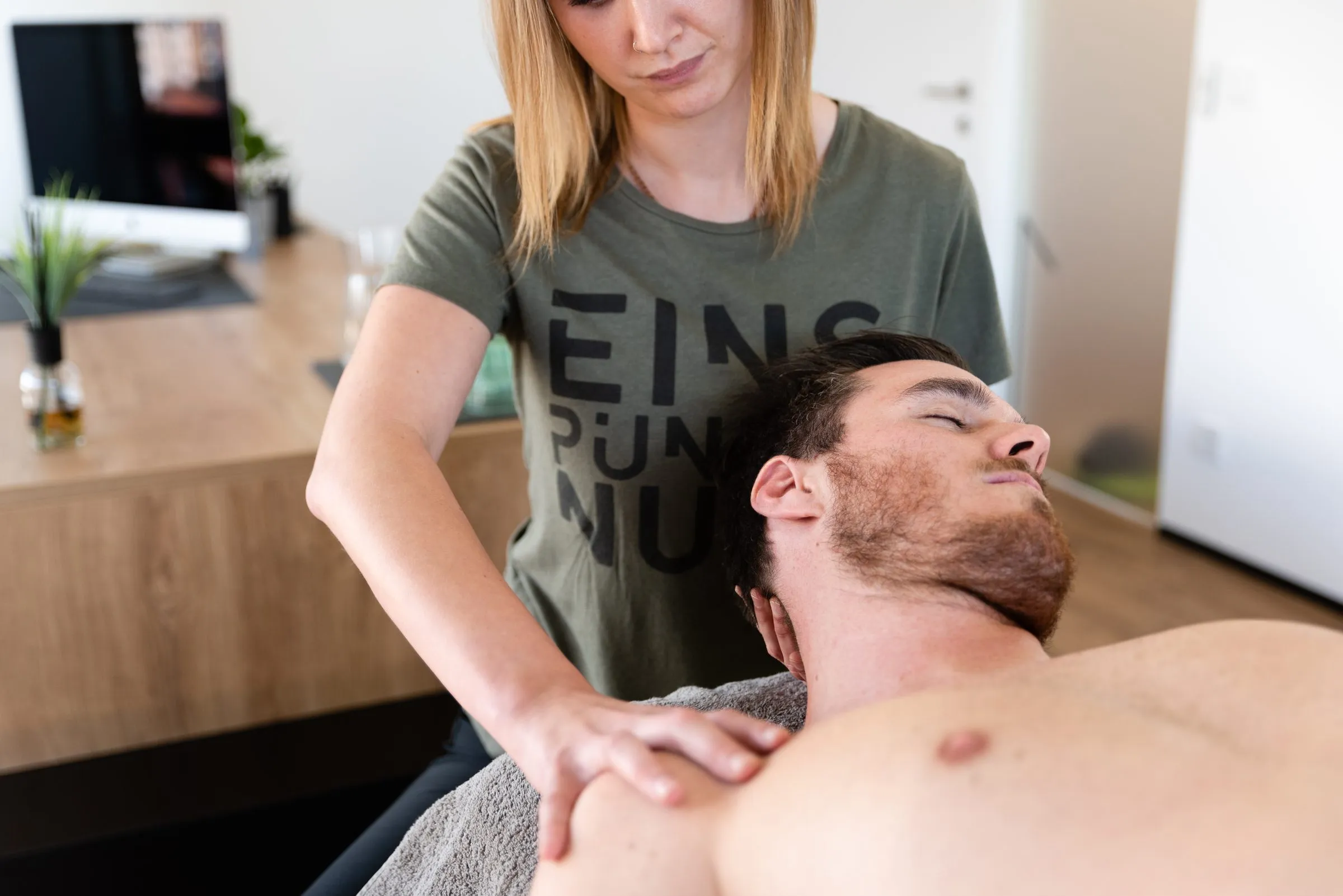
Osteopathy sees the human body as an interconnected system and is characterised by its holistic approach to treatment. While classic physiotherapy mainly works on the musculoskeletal system to treat problems, osteopathy looks at the body as a whole and considers how it relates to the organs, the nervous system and the arterial and venous blood supply. The aim of osteopathic treatment is to restore “order” in the body as a whole and so activate its self-healing powers.
Osteopathic treatment aims to identify factors in the body that stand in the way of effective physiological self-healing. These may lie in the digestive system (e.g. irregular bowel movements or inefficient digestion), result from a scar after internal or gynaecological surgery, or come from other narrowings in the blood supply or restrictions in nerve mobility.
What we offer
Stress can have many dimensions and causes and can show up in various symptoms affecting body and mind.
Osteopaths are trained to address both the symptoms and the cause.
With long-lasting or unexplained pain, osteopathy can provide a new stimulus and calm the structures in the body that are under stress.
This clears the way to encourage a positive response throughout the body that dampens the pain stimulus.
After a recent sports injury, it makes sense to support the injured structure during its acute inflammatory phase.
Osteopathic techniques can help it heal as well as possible.
The osteopath can free the pathways of the incoming and outgoing vessels from narrowings to achieve the best possible healing.
In osteopathy, older scars and past traumas are also identified through a thorough medical history and included in the treatment. This can release long-standing dysfunctions in the body so that all tissue can move freely again.
Scars often play a key role in how the human body functions. If they are disturbed or have healed poorly, they can be a weak spot that other regions of the body then have to compensate for.
Prevention is one of the central pillars of osteopathy, so osteopathic treatment is worthwhile even before acute or chronic complaints arise.
The osteopath looks preventively for factors in the body that could lead to problems later on.
Gentle osteopathic techniques support women during pregnancy to ease side effects and are also used for newborns after birth.
The gut is not called the body’s second brain for nothing. Problems here can drain a great deal of energy and strength from the body and can make people ill in the long term.
There are manual treatment techniques as well as nutritional suggestions that help bring body and person back into balance.
In some cases it is worth combining training therapy with osteopathy. An osteopathic check can reveal functional blockages in the organ system or in joints and tissue that movement alone cannot resolve.
Once the osteopath has resolved them, this can also have a positive effect on your results in training therapy.
Your contacts
Do you have questions about Osteopathy? Get in touch directly – we’re happy to advise you.

Your central point of contact
For many people, an injury, complaints or pain in the musculoskeletal system mean a stressful, unusual situation. As your central point of contact, Physio 1.0 takes care of the whole coordination – so you can focus fully on your recovery.
“The highest quality is our standard”