At a glance
What are physical modalities?
Physical modalities are a form of medical treatment that makes use of the body’s physiological responses to external stimuli. These include heat, cold, sound and electrical stimulation, among others.
What we offer
Our services
Shockwave therapy
Shockwave therapy
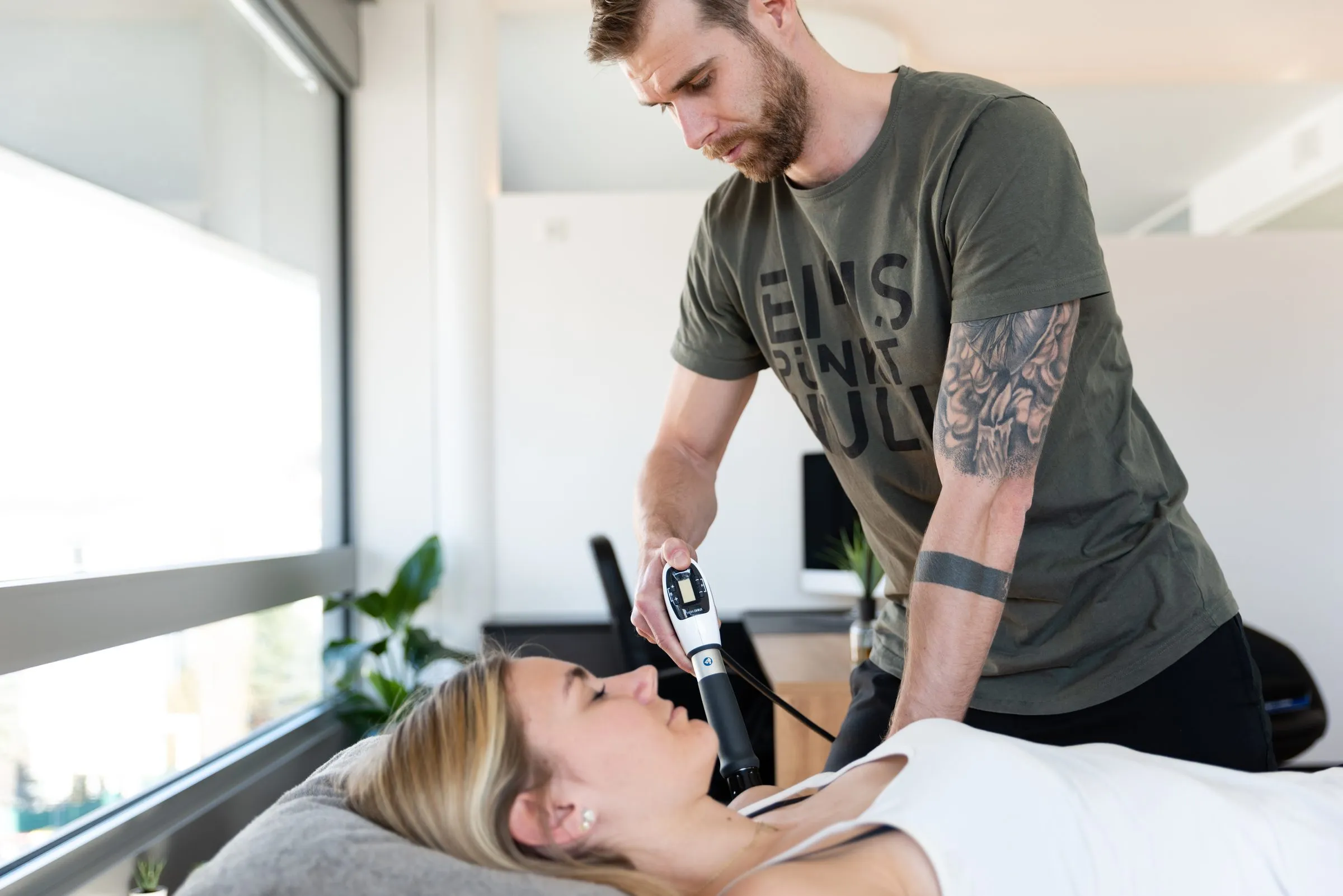
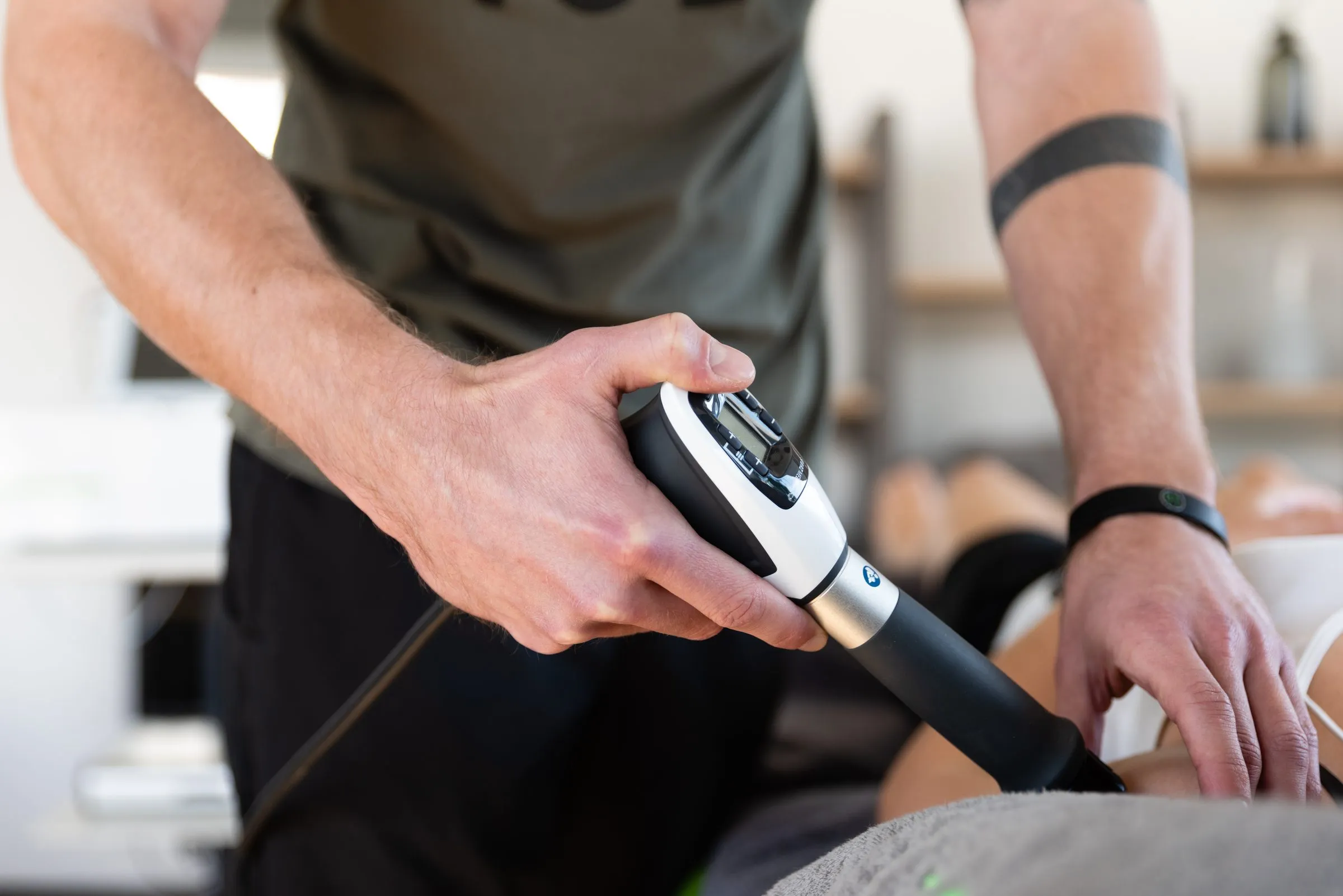
Radial shockwave therapy treats acute and chronic pain in various parts of the body efficiently and in a targeted way. The device generates shockwaves that spread through the body and activate its natural self-healing powers. This significantly reduces your complaints within a short treatment time.
In response to radial shockwave treatment, the tissue around the structure causing the problem increases its metabolic activity. This can stimulate or speed up healing, and damaged tissue regenerates efficiently. Pain often eases noticeably after just 2–3 sessions. A treatment takes about 10 minutes and is usually carried out once or twice a week.
The conditions most frequently treated with radial shockwave therapy are:
- patellar tendinopathy (jumper’s knee)
- shoulder pain (e.g. calcific shoulder)
- golfer’s elbow
- tennis elbow
- shin pain / shin splints
- muscle injuries
- muscle tension and trigger points
- Achilles tendon problems
- osteoarthritis
- heel spur
- delayed bone healing
- irritation of tendon attachments in various parts of the body
- bursitis (e.g. trochanteric bursitis)
Electrotherapy
Electrotherapy
In electrotherapy, therapeutic currents flow through the body, or through injured or painful structures, via electrodes applied to the skin.
This can trigger various processes in the body:
- pain relief
- metabolic activity
- increasing or decreasing muscle tone
- reducing swelling (promoting resorption)
- activating, stimulating and strengthening muscles
- nerve stimulation
Depending on the complaint or condition, different types of current are used in electrotherapy – low-, medium- and high-frequency. Depending on the type of current, we work with pre-moistened sponge electrodes or adhesive electrodes.
Ultrasound
Ultrasound
Together with electrical stimulation, ultrasound therapy is one of the most common forms of treatment in physical modalities. Therapeutic ultrasound at frequencies of 1 MHz or 3 MHz is delivered into the tissue as continuous or pulsed sound via an ultrasound head. Because of its many effects, ultrasound therapy is classed as both mechanotherapy and thermotherapy.
Depending on the therapy parameters (treatment frequency, type of sound, dose, duration and frequency of sessions), ultrasound treatment mainly produces either a thermal effect (heat at reflecting tissue boundaries, e.g. bones and joints) or a micro-massage in the treated tissue.
The effects of ultrasound therapy can be summarised as follows:
- hyperaemia (increased blood flow in the tissue)
- faster metabolic functions (microcirculation, diffusion)
- greater extensibility of connective tissue structures (collagen fibres)
- pain relief
- muscle relaxation and relief of spasms
- faster healing
- stimulation of fracture healing
Because ultrasound is reflected by air, a coupling medium (ultrasound gel) is used to transmit the sound waves from the ultrasound head to the tissue, or the treatment is carried out under water.
Heat & fango
Heat & fango
Heat therapy is often used to support physiotherapy. Its effects include improving blood flow, relaxing muscles and relieving pain.
Heat therapy makes use of how the skin and deeper tissue respond to heat. By stimulating thermoreceptors, heat can reach both superficial and deeper structures. The way it is applied depends on the patient’s needs.
A fango pack is one form of heat therapy. Fango is a type of mineral mud of volcanic origin. For treatment it is heated to around 40–50 degrees and applied locally to the relevant part of the body for 25 to 30 minutes. Fango packs can be used for a wide range of problems, injuries and sports injuries.
These include:
- back, neck and shoulder pain of all kinds
- rheumatic or chronic joint conditions
- tendon sheath inflammation
- muscle hardening etc.
Underwater therapy
Underwater therapy
The physical properties of water support the rehabilitation of the musculoskeletal system and help relieve pain. Therapy under water makes use of the hydrostatic pressure there, so you can move your joints under easier conditions.
Especially after surgery or accidents, active and passive mobilisation of the affected joints is very important to prevent movement restrictions, improve tissue nutrition around the injury and practise movement sequences functionally.
Conditions under water can also be used ideally for training therapy, to strengthen the whole body and train coordination.
Your central point of contact
Why
Physio 1.0
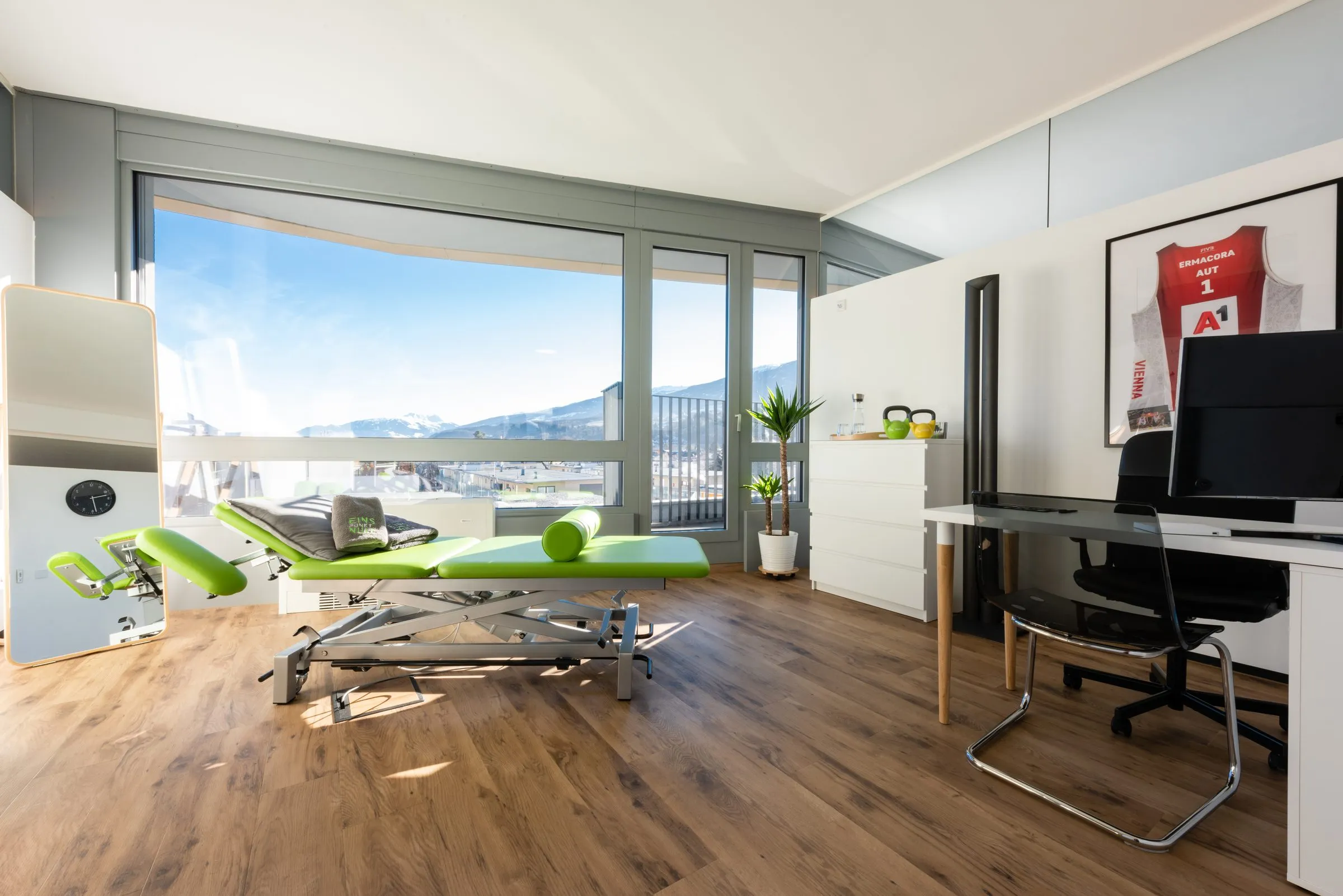
For many people, an injury, complaints or pain in the musculoskeletal system mean a stressful, unusual situation. As your central point of contact, Physio 1.0 takes care of the whole coordination – so you can focus fully on your recovery.
“The highest quality is our standard”